









In the grand tapestry of life on Earth, intelligence is not a trait reserved solely for humans. The animal kingdom is teeming with nature’s geniuses, where surprising feats of intellect, problem-solving, and emotional depth are displayed across a diverse range of species. From the skies to the seas and the breadth of land, animals showcase a multitude of cognitive abilities that challenge our perceptions of intelligence. This journey into the minds of the world’s smartest animals highlights the incredible adaptability and ingenuity of creatures great and small.
As we delve into the fascinating world of animal intelligence, we first seek to understand how intelligence is defined and measured across different species. Is it the ability to solve complex problems, use tools, or communicate effectively? Or perhaps it lies in the capacity for empathy and learning from experience? These questions guide our exploration into a variety of species known for their cognitive prowess.
Join us as we uncover the secrets of the brainy birds, where crows and parrots astonish us with their cleverness and problem-solving skills. Dive into the ocean to meet marine marvels like dolphins and octopuses, whose intelligence rivals that of land-based animals. On land, discover the luminaries such as elephants and primates, whose memories and social structures reflect profound intelligence. Even the smallest of creatures, like ants and bees, reveal a collective intellect that governs their intricate societies.
Reflecting on these insights into nature’s geniuses, it becomes clear that intelligence is not a linear trait but a complex interplay of skills adapted for survival and social interaction. As we explore these remarkable stories, we gain a deeper appreciation for the diverse expressions of intelligence across the animal kingdom, encouraging us to rethink our place in the natural world and the profound connections we share with other intelligent beings.
Understanding Animal Intelligence
Defining Intelligence in the Animal Kingdom
When we talk about intelligence in the animal kingdom, the conversation often gravitates towards the usual suspects: dolphins, great apes, and certain birds. But what exactly defines intelligence in animals? Unlike humans, whose intelligence is often measured by IQ tests and academic achievements, animal intelligence is a more complex and nuanced concept. It encompasses a variety of traits such as problem-solving abilities, tool use, communication skills, self-awareness, and emotional intelligence.
In the wild, intelligence is often a matter of survival. Animals that can adapt to changes in their environment, solve problems, and develop social structures tend to thrive. For instance, crows are known for their ability to use tools to access food, demonstrating not just problem-solving skills but also foresight and planning. Similarly, dolphins are renowned for their complex vocalizations and ability to understand abstract concepts, showcasing both their cognitive and communicative prowess.
Intelligence in the animal world is not confined to a single spectrum but varies widely across different species. From the memory of elephants to the mimicry skills of parrots, each species exhibits intelligence in ways that are uniquely adapted to their ecological niches and survival needs.
Methods for Measuring Animal Intelligence
Measuring animal intelligence is a challenging endeavor. Unlike humans, animals do not take standardized tests, and their intelligence cannot be quantified by numbers alone. However, scientists have developed various methods to gauge the cognitive abilities of animals, often through behavioral experiments and observational studies.
One common method is the use of problem-solving tests, where animals are presented with puzzles or tasks that they must solve to obtain a reward. For example, researchers have observed chimpanzees using sticks to extract termites from mounds, demonstrating both tool use and problem-solving capabilities. Similarly, octopuses have been seen opening jars to access food, a testament to their dexterity and intelligence.
Another approach is the study of communication and social behavior. Dolphins, for instance, are known for their sophisticated communication skills, which include a rich repertoire of vocalizations and body language. By analyzing these interactions, scientists can infer the cognitive capabilities of these marine mammals.
Self-awareness tests, such as the mirror test, are also employed to determine whether animals possess the ability to recognize themselves. Elephants, great apes, and certain bird species have passed this test, indicating a level of self-awareness that is rare in the animal kingdom.
Finally, observational studies in natural habitats provide insights into the social structures and cultural behaviors of animals. By observing how animals interact with each other and respond to their environment, researchers can gain a deeper understanding of their intelligence.
The quest to understand and measure animal intelligence is ongoing, and as we delve deeper into the minds of these creatures, we continue to uncover the remarkable ways in which they navigate their world. The smartest animals are not just those with the highest cognitive abilities but those that have adapted their intelligence to thrive in their respective environments.
The Brainy Birds
Birds have long captivated humans with their vivid colors, melodious songs, and impressive aerial acrobatics. However, beyond their beauty and grace, certain bird species exhibit levels of intelligence comparable to some of the smartest animals on Earth. Among these, crows and parrots stand out as remarkable examples of avian intellect, showcasing a range of cognitive abilities from tool use to complex communication.
The Cleverness of Crows
Crows, members of the corvid family, have garnered a reputation for their intelligence. These birds are often considered among the smartest animals due to their problem-solving skills, tool use, and social intelligence. Crows have been observed crafting and using tools in the wild, an ability once thought to be exclusive to humans and primates. In fact, some crows can fashion hooks from twigs to extract insects from tree bark, demonstrating a level of foresight and dexterity that is truly astonishing.
One of the most famous studies on crows involved a New Caledonian crow named Betty, who was able to bend a piece of wire into a hook to retrieve food from a container, despite never having encountered this situation before. This experiment highlighted not only the crow’s ability to use tools but also its capacity for innovation and adaptation in novel scenarios.
Crows are also known for their impressive memory and ability to recognize human faces. This skill allows them to identify and remember potential threats, as well as individuals who have been kind to them. Such recognition helps them navigate their environment more safely and effectively, showcasing their social intelligence.
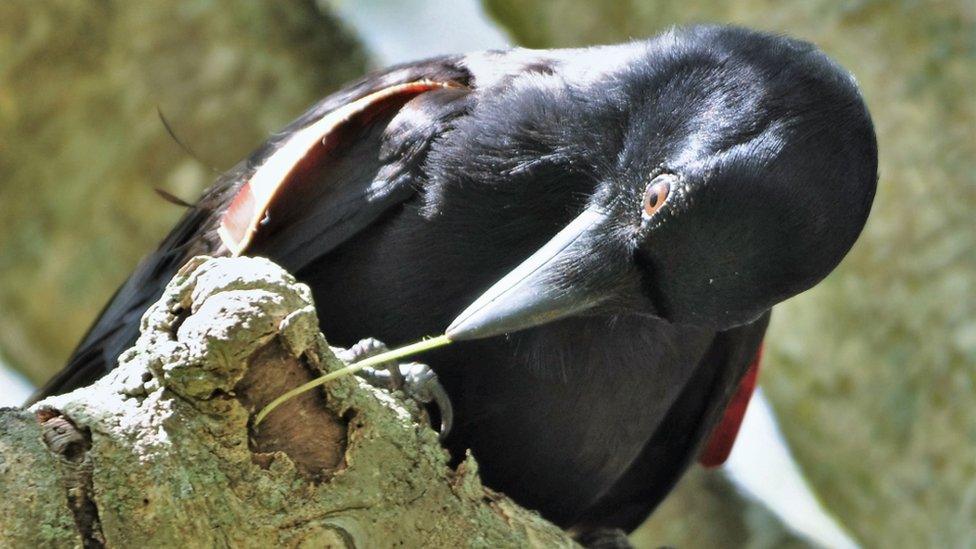
A New Caledonian crow using a tool to extract food
Parrots: Masters of Mimicry and Problem Solving
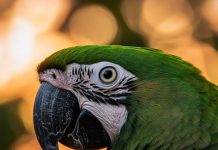
Parrots are not only known for their vibrant plumage but also for their exceptional ability to mimic sounds, including human speech. This capability goes beyond mere imitation; it reflects their advanced learning and memory skills. Parrots, such as the African Grey, have demonstrated the ability to understand concepts, solve problems, and even communicate with humans in meaningful ways.
One of the most famous parrots, Alex the African Grey, revolutionized the way scientists perceive avian intelligence. Under the guidance of Dr. Irene Pepperberg, Alex was able to identify objects, differentiate colors, and even understand abstract concepts like ‘bigger’ and ‘smaller’. His ability to learn and use a vocabulary of over 100 words showcased not only his mimicry skills but also his cognitive understanding.
Parrots also exhibit problem-solving abilities that rival those of crows and primates. They can solve complex puzzles to access food or other rewards, indicating a high level of reasoning and foresight. This combination of mimicry and problem-solving positions parrots as some of the smartest animals in the avian world.
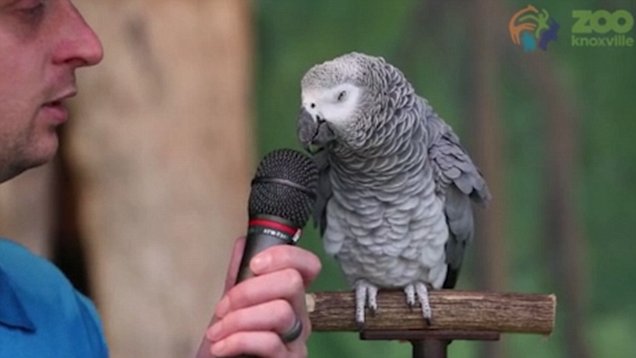
An African Grey parrot demonstrating mimicry skills
In conclusion, the intelligence of crows and parrots underscores the complex cognitive abilities present in the avian kingdom. These brainy birds continue to challenge our understanding of animal intelligence and inspire further exploration into the minds of nature’s geniuses. By studying these remarkable creatures, we gain valuable insights into the evolution of intelligence and the diverse forms it can take across different species.
Marine Marvels
Dolphins: The Ocean’s Intellectuals
Dolphins have long been celebrated as one of the smartest animals in the world, captivating researchers and enthusiasts alike with their remarkable cognitive abilities. These charismatic marine mammals possess a level of intelligence that rivals that of great apes and humans in several aspects.
One of the most fascinating attributes of dolphins is their sophisticated use of vocalizations. Dolphins communicate through a complex system of clicks and whistles, each serving distinct purposes such as navigation, hunting, and social interaction. Remarkably, dolphins can recognize themselves in mirrors, an indication of self-awareness that is rare among animals. This ability suggests a level of cognitive sophistication that is both intriguing and extraordinary.
Moreover, dolphins exhibit an understanding of abstract concepts and symbols. In various studies, they have been trained to recognize symbols and even understand the concept of numerical values, showcasing their problem-solving skills. Their playful nature is not just for amusement; it often involves intricate games and strategies that highlight their ability to plan and cooperate.
Dolphins are also known for their exceptional empathy and social intelligence. They live in complex social structures called pods, where they cooperate in hunting and care for each other’s young. There have been numerous accounts of dolphins displaying altruistic behaviors, such as rescuing humans and other animals in distress. This empathy and cooperation are crucial for their survival in the wild and are a testament to their sophisticated emotional intelligence.

Dolphins showcasing their playful nature in the ocean
Octopuses: The Eight-Armed Geniuses
Octopuses are often referred to as the Einsteins of the sea, and for good reason. These incredible creatures possess a unique set of skills and intelligence that make them stand out in the marine world. Unlike many other animals, octopuses have both a decentralized nervous system and a significant portion of their neurons located in their arms, enabling them to perform complex tasks independently.
One of the most notable aspects of octopus intelligence is their ability to solve puzzles and escape from enclosures. In laboratory settings, octopuses have been observed opening jars to retrieve food, a task that requires understanding and manipulating objects in a way that few non-human animals can achieve. Their problem-solving skills extend beyond puzzles; they have been seen using coconut shells as tools for protection, showcasing their resourcefulness and adaptability.
Octopuses are also masters of camouflage, capable of changing their skin color and texture to blend seamlessly into their surroundings. This ability is not merely for concealment but also for communication and signaling to other octopuses. The rapid and precise changes in their appearance are controlled by their nervous system, demonstrating a level of control and intelligence that is truly remarkable.
Furthermore, octopuses possess the ability to learn through observation. In various experiments, they have been shown to imitate the actions of other octopuses to achieve a desired outcome, indicating a level of cognitive processing that involves memory and learning.
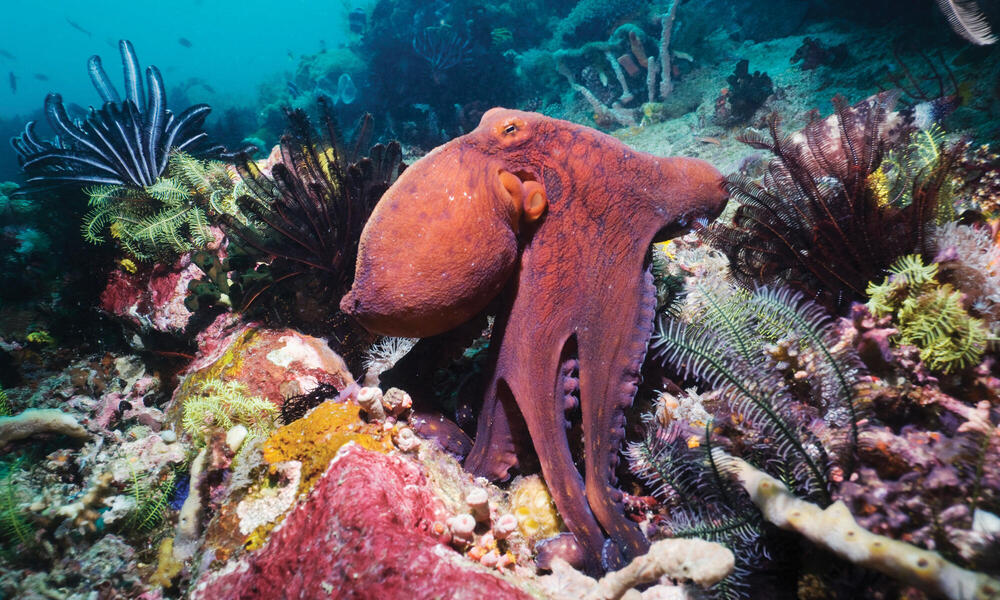
An octopus expertly camouflaging in a coral reef
In conclusion, both dolphins and octopuses exemplify the extraordinary intelligence found in the marine world. Their advanced cognitive abilities, from problem-solving to social intelligence, position them among the smartest animals on Earth. By studying these marine marvels, we gain deeper insights into the complexities of animal intelligence and the evolutionary adaptations that have shaped their behaviors and capabilities.
Land-Based Luminaries
Elephants: Giants with Great Memories
When we think of the smartest animals in the land, elephants often come to mind as remarkable creatures with extraordinary cognitive abilities. Known as the gentle giants of the animal kingdom, elephants have captivated human fascination for centuries. Their intelligence is not only seen in their sheer size but also in their profound emotional depth and impressive memory.
One of the most compelling aspects of elephant intelligence is their memory. Often termed as having a “memory like an elephant,” these creatures are capable of remembering watering holes, migratory routes, and even specific locations over vast distances and many years. This incredible memory is crucial for their survival, especially in the harsh environments of Africa and Asia where water sources can be scarce.
Elephants also exhibit a high degree of emotional intelligence. They are known to show empathy, mourning, and even altruistic behaviors. There have been numerous documented instances of elephants mourning the death of a herd member. They have been observed to stand by the deceased, gently touching the body with their trunks, and sometimes even covering it with leaves and branches. This behavior is a poignant reminder of their emotional depth and social bonds.
Social structure is another area where elephants display their intelligence. They live in matriarchal societies led by the oldest and often the wisest female. This structure allows them to form complex relationships and social hierarchies. The matriarch’s role is crucial as she guides the herd in migratory paths and teaches younger members survival skills. Such social learning and cooperation are indicators of their cognitive sophistication.
In addition to their emotional and social intelligence, elephants have shown remarkable problem-solving skills. They use tools in the wild, such as using branches to swat flies or scratch themselves. They also demonstrate self-awareness, as evidenced by their ability to recognize themselves in mirrors—a trait that is rare in the animal kingdom.
These attributes make elephants not only one of the smartest animals on land but also one of the most emotionally complex. Their intelligence parallels their grandeur, making them fascinating subjects of study and admiration.
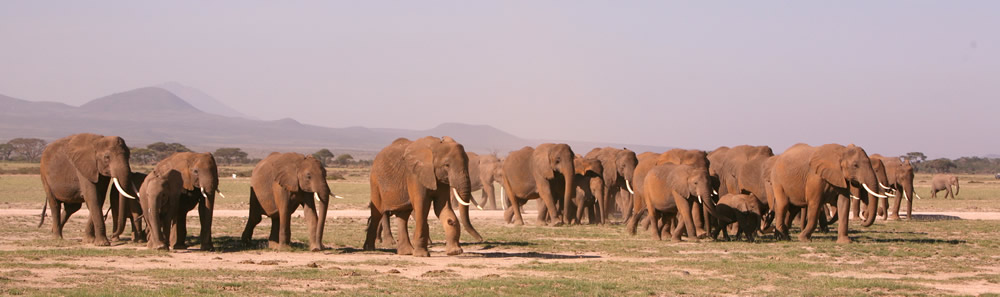
A herd of elephants displaying their social structure
Primates: Our Close and Clever Relatives
Primates, including chimpanzees, gorillas, bonobos, and orangutans, are our closest relatives in the animal kingdom and are undoubtedly among the smartest animals on Earth. Their intelligence is often compared to that of young human children, and their behaviors continue to provide insight into our own evolutionary past.
Chimpanzees, for instance, have been observed using tools in the wild, such as sticks to fish for termites or rocks to crack open nuts. This tool use is not just instinctual but also learned and taught among group members, highlighting their ability to pass knowledge across generations. Moreover, chimpanzees exhibit problem-solving skills that involve logic and planning, akin to human behavior.
Gorillas and bonobos, like chimpanzees, demonstrate social intelligence and emotional depth. In captivity, gorillas have been taught to communicate with humans using sign language, showcasing their capacity for symbolic communication—a significant marker of intelligence. Bonobos are known for their peaceful societies, where conflict resolution often involves social bonding activities rather than aggression.
Orangutans, with their solitary nature, are adept at using their environment to their advantage. They craft tools for various purposes, including extracting insects from tree bark or using leaves as umbrellas during rain. This adaptability and ingenuity are further signs of their cognitive abilities.
Primates also exhibit self-awareness, a trait shared with very few animals. This is often tested through the mirror test, where animals recognize their reflection as being themselves rather than another creature. Such self-recognition is a complex cognitive skill, indicative of advanced intelligence.
The study of primates offers profound insights into the evolution of intelligence and social behavior. They remind us of the shared ancestry and cognitive capabilities that bridge humans with the animal kingdom. Observing primates in their natural habitats highlights not only their intelligence but also their importance in the tapestry of life on Earth.
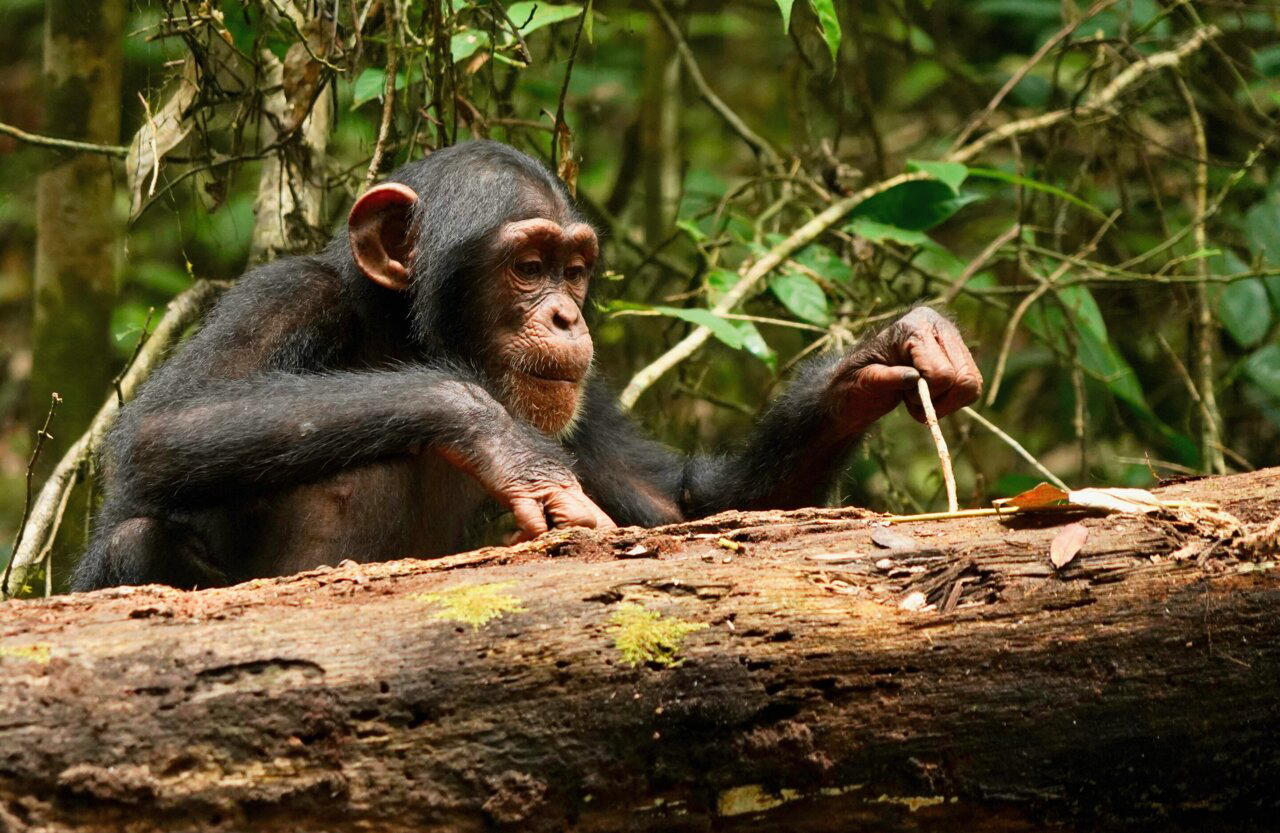
A chimpanzee skillfully using a stick to fish for termites
In understanding these land-based luminaries, we gain deeper respect and admiration for the smartest animals that share our planet. Their intelligence challenges our perception of the animal kingdom and underscores the importance of conservation and protection of these remarkable creatures.
Insects with Intellect
When we ponder the smartest animals in the world, our minds often gravitate towards larger creatures like dolphins or elephants. However, the insect world is teeming with its own kind of intelligence. From the strategic maneuvers of ants to the architectural genius of bees, these tiny creatures demonstrate that intelligence isn’t solely defined by size or complexity of the brain.
The Strategic Ants
Ants are often overlooked when it comes to discussions about intelligence, but their ability to work collectively and strategically is nothing short of remarkable. As one of the most successful groups of insects on the planet, ants exhibit behaviors that are complex and fascinating.
Ants are known for their highly organized colonies, where each member has a specific role. The queen is the heart of the colony, responsible for reproduction, while workers and soldiers ensure the sustainability and protection of the colony. What makes ants particularly fascinating is their use of pheromones for communication. These chemical signals allow them to leave scent trails to food sources, mark territories, and even signal danger.
One of the most impressive feats of ant intelligence is their ability to solve complex problems through collective behavior. For example, when encountering an obstacle, ants will work together to find the shortest path around it, a behavior known as swarm intelligence. This form of problem-solving is similar to algorithms used in computer science for network optimization.
Ants also showcase strategic behavior in warfare. Some species engage in organized raids against other colonies to steal resources or enslave their larvae. This level of strategic thinking requires a sophisticated understanding of cooperation and resource management, underscoring the notion that intelligence manifests in various forms in the animal kingdom.
Bees: The Architects of Nature
Bees, particularly honeybees, are another example of incredible insect intelligence. Known for their role in pollination and honey production, bees are also master architects, creating intricate hives that are marvels of engineering.
One of the most intriguing aspects of bee intelligence is their communication system. Bees use a “waggle dance” to convey information about the location, distance, and quality of food sources to other members of the hive. This dance communicates complex information through movement and vibration, showcasing a sophisticated form of non-verbal communication.
Moreover, bees exhibit problem-solving abilities and learning capacity. Experiments have shown that bees can learn to associate specific colors with food rewards and even solve puzzles to access nectar. This level of cognitive ability illustrates that intelligence in the animal kingdom extends beyond mammals and birds.
Bees also display an impressive understanding of geometry. Their hives, structured in hexagonal patterns, are not only aesthetically pleasing but also highly efficient. The hexagon is the most efficient shape for space utilization, allowing bees to store the maximum amount of honey with minimal wax. This architectural genius highlights the bees’ innate understanding of complex mathematical principles.
In conclusion, the world of insects offers a unique perspective on intelligence. Ants and bees, through their complex behaviors and problem-solving skills, remind us that intelligence in the natural world is diverse and multifaceted. As we continue to explore the concept of the smartest animals, it’s essential to appreciate the brilliance that exists even in the smallest of creatures.
Reflecting on Nature’s Geniuses
As we delve into the remarkable world of the smartest animals, it’s essential to pause and reflect on the profound intelligence these creatures exhibit. Their abilities often challenge our understanding of cognition and intelligence, prompting us to reconsider what it truly means to be “smart.” From the intricate problem-solving skills of an octopus to the complex social structures of elephants, the animal kingdom is replete with examples that both inspire and humble us.
The Intricacies of Animal Intelligence
Animal intelligence is not a monolithic concept; it manifests in myriad forms, each adapted to the unique challenges and environments that different species face. For instance, the cooperative nature of ants and bees showcases a form of collective intelligence that rivals our own in efficiency and organization. These insects demonstrate that intelligence can thrive in forms we might not immediately recognize.
Emotional Depth and Social Complexities
One of the most striking revelations about animal intelligence is the emotional depth that many species possess. Elephants, for example, are known for their profound empathy and memory. They mourn their dead and can recall paths and locations across vast savannas. Similarly, dolphins display a range of emotions and social behaviors that include play, cooperation, and even cultural transmission, such as the use of tools or hunting techniques passed down through generations.

Elephants displaying their remarkable emotional intelligence
Communication Beyond Words
Communication is another critical aspect of intelligence, and many animals excel in this realm. Parrots, with their ability to mimic human speech, and dolphins, using complex vocalizations, demonstrate that non-human communication can be as sophisticated as our own. These abilities not only allow them to interact with us but also play crucial roles in their survival and social interactions.
Learning and Adaptation
The capacity for learning and adaptation is perhaps one of the most defining traits of intelligent animals. Crows and ravens are renowned for their problem-solving skills and ability to adapt to new challenges. They can use tools, recognize human faces, and even engage in tactical thinking, showcasing a level of cognitive sophistication that often surprises researchers.
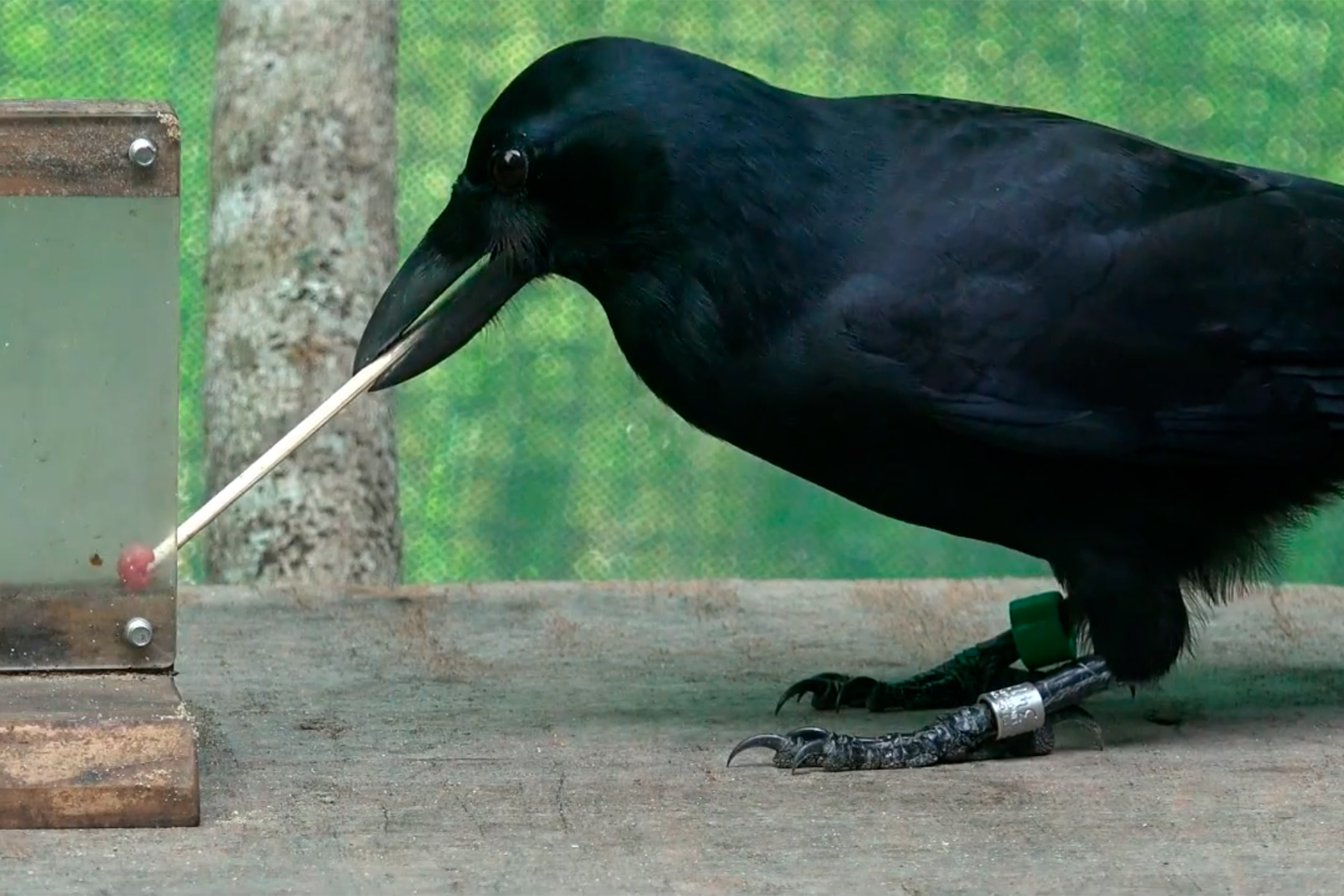
A crow using tools to solve a problem
Implications for Human Understanding
Reflecting on the intelligence of these animals underscores the interconnectedness of life on Earth. It challenges us to appreciate the diversity of cognitive abilities in the animal kingdom and to recognize that intelligence is not uniquely human. This understanding not only enriches our knowledge but also calls for a greater appreciation and respect for the natural world. As we continue to study and learn from the smartest animals, we gain insights into the evolutionary processes that have shaped life on our planet.
In conclusion, the exploration of animal intelligence reveals a tapestry of cognitive abilities that are both varied and profound. Whether it’s the strategic mind of an octopus or the emotional depth of elephants, these creatures remind us of the wondrous complexities of life. As we reflect on these natural geniuses, we are invited to broaden our perspectives and deepen our connections with the world around us.
WildWhiskers is a dedicated news platform for animal lovers around the world. From heartwarming stories about pets to the wild journeys of animals in nature, we bring you fun, thoughtful, and adorable content every day. With the slogan “Tiny Tails, Big Stories!”, WildWhiskers is more than just a news site — it’s a community for animal enthusiasts, a place to discover, learn, and share your love for the animal kingdom. Join WildWhiskers and open your heart to the small but magical lives of animals around us!